
Drywall repair is one of those jobs where the honest answer to “what will it cost?” is “it depends on the hole” — but that is not a useful answer when you are trying to decide whether to call someone or pick up a patch kit yourself. So here are the real ranges Stratford homeowners are working with, what moves a job from the bottom of a range to the top, and the one Stratford-specific wrinkle — plaster — that can change the job entirely.
The short version — orientation ranges
- Small patches (doorknob holes, anchor pull-outs, dents): professional drywall repair time in Canada is commonly billed around $75–$150 per hour (HomeStars Canada), and setup, travel and cleanup apply no matter how small the patch is — so even a quick job usually lands at a minimum service charge rather than a per-hole price.
- A doorknob hole, patched and paint-ready: roughly $250–$400 in Toronto-area invoice data.
- A single damaged wall, patched and paint-ready: roughly $250–$650 per wall in the same data.
- A water-stained ceiling section, once the leak is fixed and the area has dried: roughly $450–$900.
Two cautions on those numbers. First, they are orientation ranges, not quotes — the actual price comes from the size of the damage and what is underneath it. Second, most of the published invoice data is GTA-based, and Stratford labour generally runs below GTA rates, so treat these as a ceiling for planning, not a prediction. The full breakdown of what a repair involves is on our drywall repair page.
Sources: HomeStars Canada drywall cost pages; Home Painters Toronto drywall repair cost guide (2024–2025 invoice data).
What actually moves the price
Size — but not the way you’d expect. Doubling the size of a patch does not double the price. Most of the cost is in the visits: drywall compound goes on in thin coats with drying time between them, so a repair is usually two or three short visits whether the patch is four inches or fourteen. That is why three small holes in one room often cost barely more than one — they share the same trips.
Texture matching. A smooth wall is the cheapest finish there is. If your wall or ceiling carries a texture, matching it so the repair disappears takes extra time and is the part of the job most likely to be quoted separately. Popcorn and stipple ceilings are their own case — if the ceiling itself is the problem rather than a patch in it, see our popcorn ceiling removal page.
Whether the board is sound. Staining alone, on board that is firm and fully dry, can often be sealed and refinished. Board that has gone soft, sagged, or crumbled at the edges has to be cut back to solid material and replaced — a bigger job, and the right one, because patching over soft board just hides a problem that keeps growing behind the paint. Leak damage has its own process and its own price drivers; they are laid out on the water damage repair page.
Paint-ready vs. painted. Most drywall quotes end at paint-ready: taped, mudded, sanded, and primed-ready. Painting is normally quoted separately. If a price seems unusually low, check which finish it actually ends at — that is the most common reason two quotes for the “same” repair are far apart. What the taping and finishing stages themselves involve is explained on the taping, mudding & finishing page.
The Stratford wrinkle: it might be plaster
In Stratford’s older homes — the Victorian-era stock around the downtown and the Avon River — a “drywall repair” is often partly a plaster repair. Lath-and-plaster walls crack differently from board, the loose material has to be keyed or removed before patching, and transitions between old plaster and new drywall need to be feathered so the join does not crack along the seam line later. None of that makes the job impossible or dramatically more expensive, but it does mean the assessment has to establish which wall type you actually have before a firm price is given. A quote given sight-unseen on an older Stratford home is a guess, whichever contractor gives it.
Newer homes on the city’s edges are the opposite case: the board is board, the damage is usually dents, doorknob holes and moving-day scrapes, and the ranges above apply cleanly.
When it’s worth doing yourself — and when it isn’t
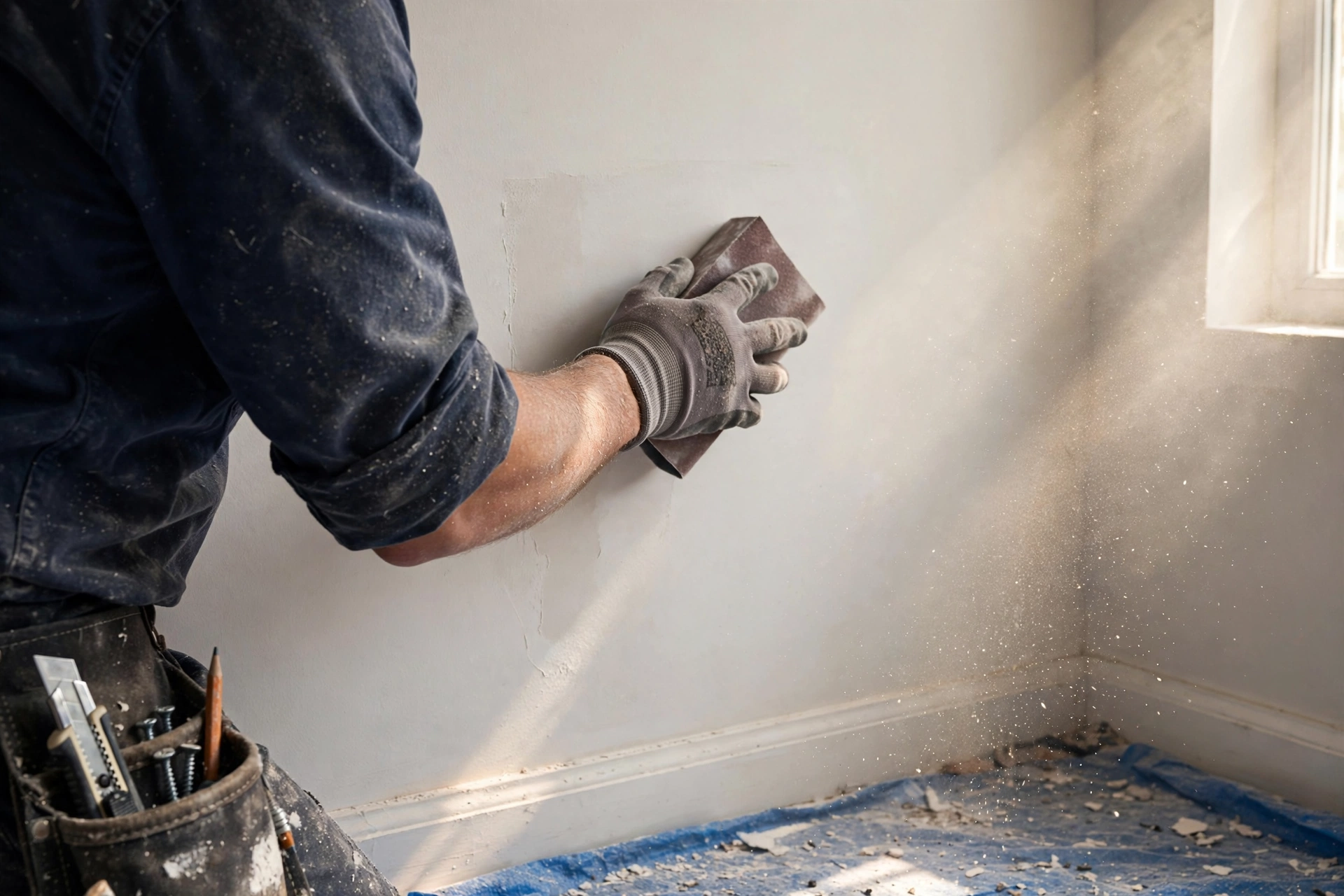
A single small hole in a smooth wall, in a room where a slightly visible patch won’t bother you, is a reasonable weekend job: a self-adhesive patch, compound, a sanding block, and patience with thin coats. Be honest about the two places DIY repairs usually show: the patch telegraphs through the paint because it wasn’t feathered wide enough, and the texture (or lack of it) doesn’t match the surrounding wall under side light.
Call it in when any of these are true: the board is soft or water-stained, the damage is on a ceiling, the wall is plaster, the repair has to be invisible (a home being listed, a room with strong natural light), or there are several holes across several rooms — at that point the per-visit economics favour one professional pass over a week of drying coats in your spare time. And if the damage is part of a bigger project — a basement being finished or a room being opened up — fold it into that quote instead; the new drywall installation page covers how that work is priced.
Getting an actual number for your wall
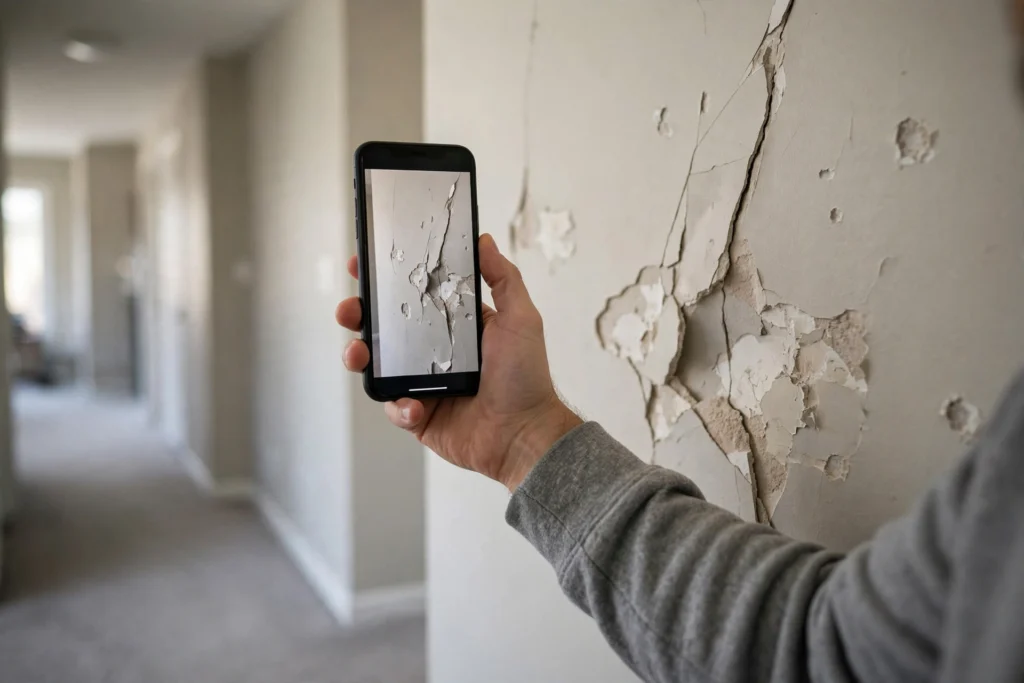
The ranges above plan a budget; they don’t price your repair. What does: a photo of the damage and a rough measurement. Send both through the contact form and you will get a straight answer on whether it is a patch or a section replacement, and what that costs — before anyone books a visit.
Call or text 548-325-9878, or send a photo of the damage through the contact page for a free quote.